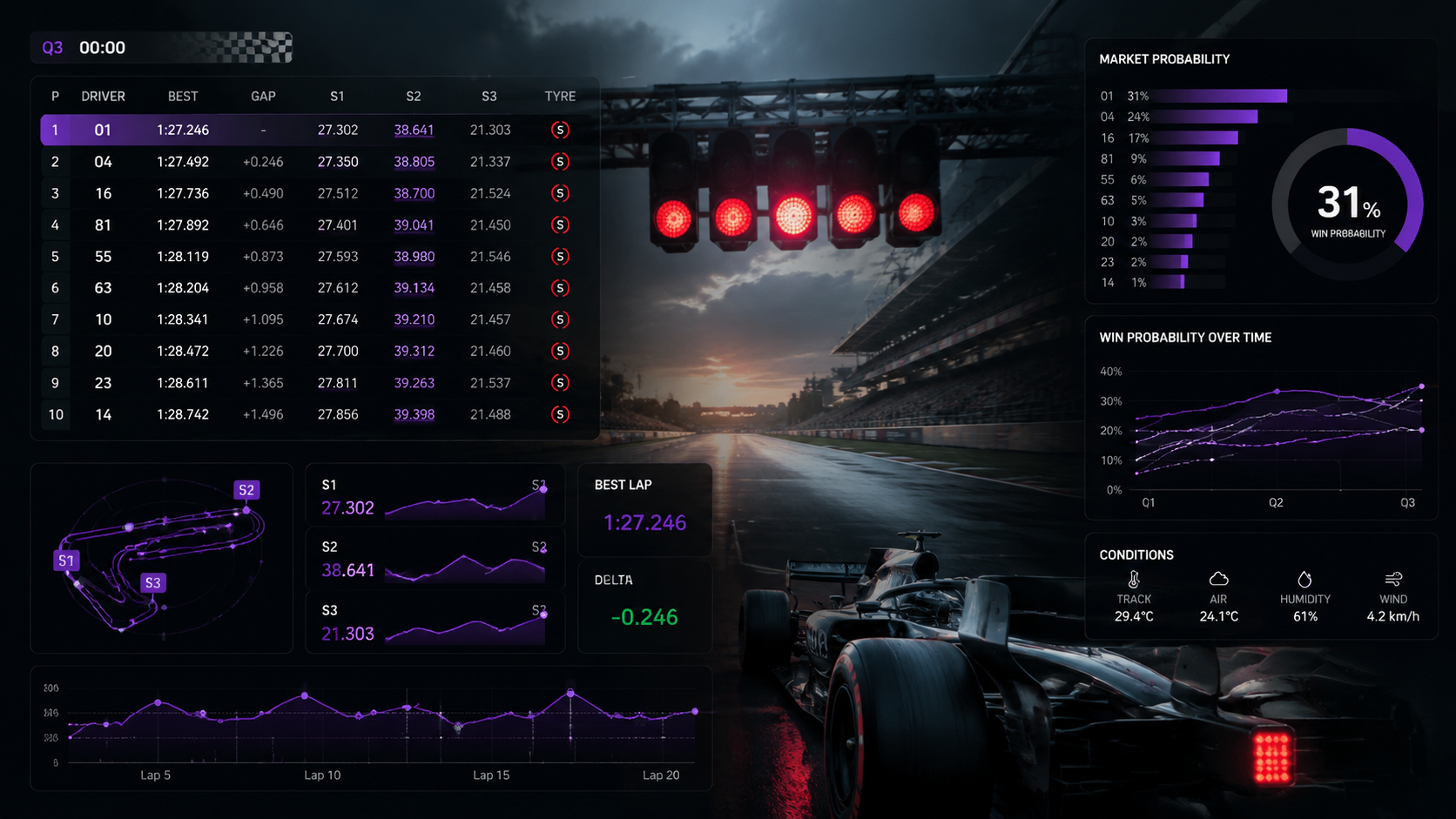
F1 qualifying odds matter because Saturday turns vague race-week information into grid position. Before qualifying, traders are interpreting practice pace, weather, and team comments. After qualifying, the market gets a hard data point: who starts where.
That does not mean qualifying should decide every market. A pole lap at Monaco is a different signal from pole at Spa. A front-row start with poor race pace is fragile. The goal is to understand when qualifying deserves a major repricing and when the market has overpaid for Saturday glory.
Key takeaways
- Qualifying is the first hard reset of most F1 race weekends.
- Track position matters most on circuits where overtaking is difficult.
- Long-run pace can make a qualifying result less meaningful.
- Championship odds move when qualifying changes expected points for contenders.
Why Saturday Is a Market Reset
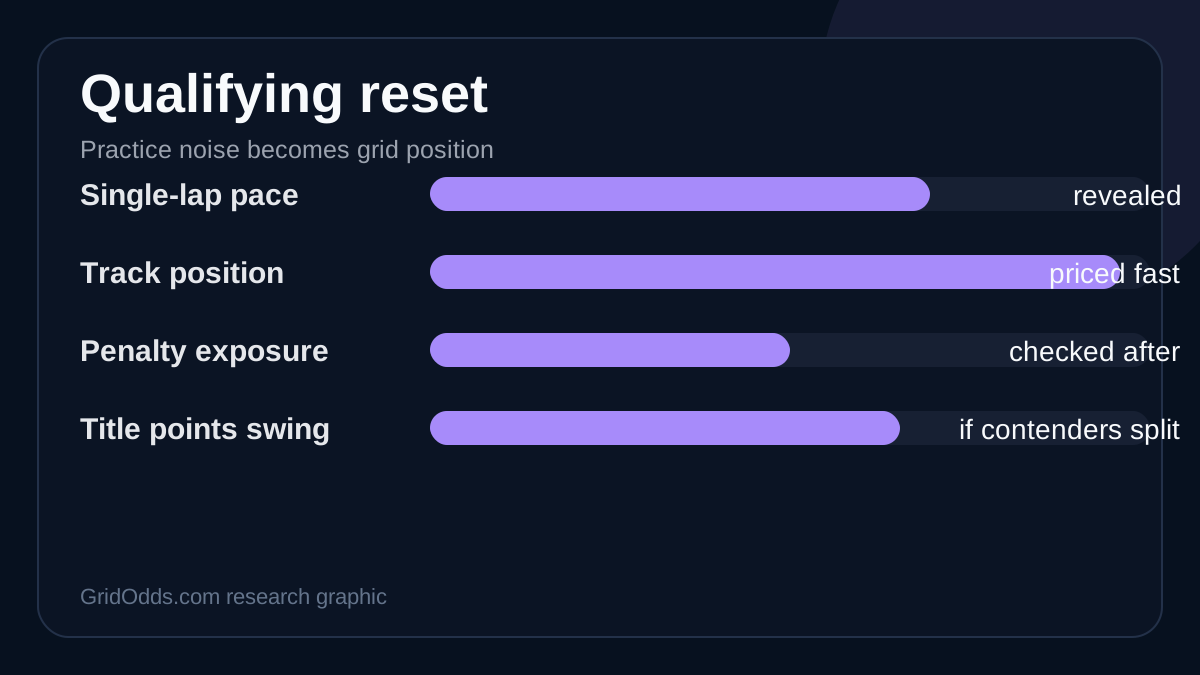
Practice is full of uncertainty. Qualifying strips away much of it. Fuel loads are low, teams reveal more pace, and every driver has to execute under pressure. The market now has a starting grid, which is one of the strongest inputs for race probability.
For race-winner odds, qualifying can be decisive. For championship odds, qualifying matters when it changes the expected points swing between contenders. If a title leader qualifies sixth while a rival takes pole, the market may adjust before the race starts because the expected points gap has changed.
Circuit Type Decides How Much Qualifying Matters
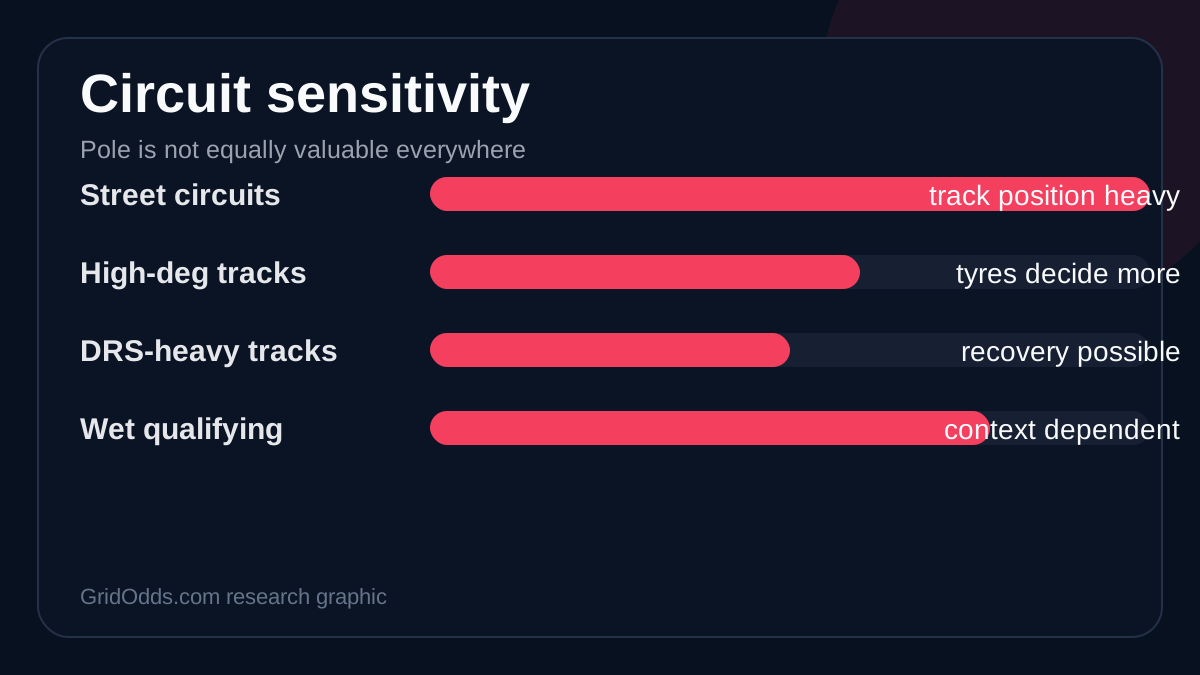
The same qualifying result has different value depending on the circuit. On a narrow street circuit, track position can be the race. On a high-degradation circuit, tyre life may matter more. On a track with long straights and multiple DRS zones, a faster race car can recover from a weaker grid slot.
This is why generic Saturday takes are usually weak. The better question is not “who is on pole?” It is “how much is pole worth at this circuit, in these conditions, against this race-pace picture?”
When Qualifying Is Overvalued
The market can overvalue qualifying when a driver produces a spectacular lap that is not backed by race pace. A car that heats tyres quickly may look brilliant over one lap and then struggle with degradation. A driver who qualifies ahead because of track evolution may not have the pace to hold position across a full stint.
Weather can also distort qualifying. A mixed session may produce a strange grid that creates opportunity, but the market needs to know whether Sunday will be similar. If qualifying was wet and the race is dry, Saturday may tell us less about race pace than the headline grid suggests.
When Qualifying Is Undervalued
The market can undervalue qualifying when track position is extremely powerful. Monaco is the obvious case, but it is not the only one. Singapore, Hungary, Zandvoort, and other high-track-position circuits can make a small qualifying advantage worth more than casual bettors expect.
This is also where championship odds can move. If a contender gets trapped behind slower cars on a circuit where overtaking is difficult, their expected points may fall even before the lights go out.
A Qualifying Odds Checklist
- How hard is overtaking at this circuit?
- Does the polesitter also have strong long-run pace?
- Was qualifying clean, wet, red-flagged, or track-evolution heavy?
- Are any grid penalties still pending?
- Does the grid create a title points swing?
- Did the market move more than the result deserves?
How to Use GridOdds After Qualifying
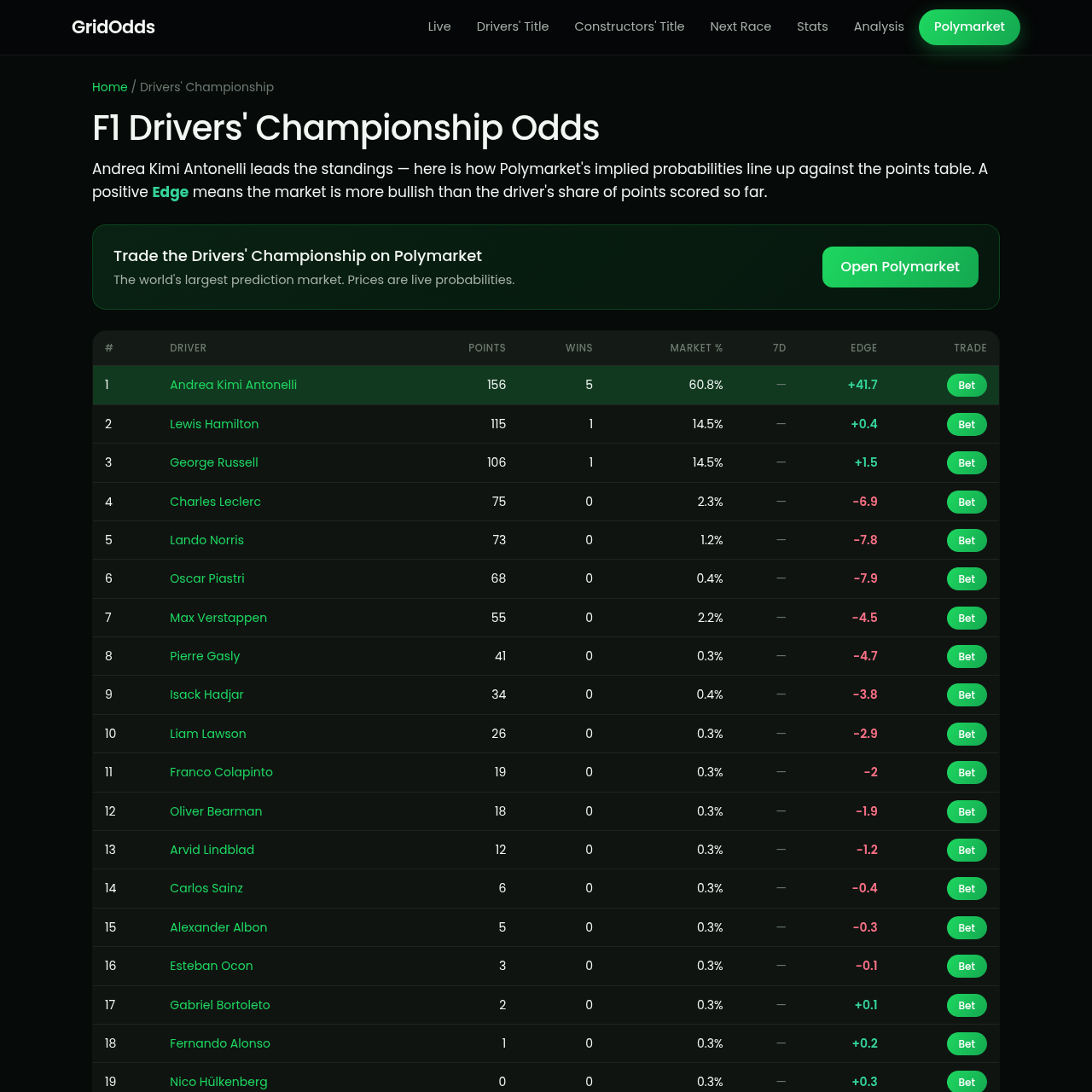
After qualifying, check the live odds board for immediate market reaction. Then compare the move against the drivers standings and odds table. If a driver shortens in the race market but barely moves in the championship market, traders may see the result as a one-weekend event. If both move together, the market thinks Saturday changed the season path.
GridOdds is an odds research site, not a sportsbook or financial adviser. Use this as educational analysis only, and only participate in prediction markets or betting products where it is legal for you.
Frequently Asked Questions
- Do F1 qualifying odds predict the race winner?
They help, but they do not predict the winner alone. Race pace, tyre degradation, weather, and strategy still matter.
- Why does pole position matter more at some tracks?
Overtaking difficulty changes the value of track position. Pole is more powerful where passing is rare.
- Should championship odds move after qualifying?
They should move when qualifying changes expected points for title contenders, especially on track-position-heavy circuits.
Gold Standard Analysis Layer
A Practical Qualifying Price Check
After Q3, write down three things before looking at the market move: who starts first, how hard the circuit is to overtake, and whether the polesitter had convincing long-run pace. Those three facts explain most of the first repricing. If the market moved far beyond what those facts justify, the Saturday result may be overvalued.
Then check whether the qualifying result changes the championship path. If a title leader starts on pole and the nearest rival starts seventh, the race market moves first and the championship market may follow. If two non-contenders lock out the front row, the race market can change without much title-market impact.
Circuit Examples
Monaco and Singapore
Track position is king. Qualifying can decide most of the race probability because overtaking is difficult and safety-car timing often protects the leader rather than hurting them.
Spa and Monza
Qualifying still matters, but race pace and straight-line efficiency can let faster cars recover. The market should give pole a premium, but not the same premium it gives at Monaco.
Silverstone and Bahrain
Tyre degradation and race pace can outweigh one-lap position. A driver who qualifies second with better long-run pace may deserve to be close to or ahead of the polesitter in race probability.
How Qualifying Content Supports SEO
F1 qualifying is a huge broad term, but F1 qualifying odds is narrower. The page does not need to rank for every qualifying result query. It needs to own the market interpretation angle, then link to weekend odds, weather odds, Grand Prix odds, and live market movement.
Refresh Plan
Refresh this page after major qualifying-heavy weekends with one new example. The structure stays evergreen, but examples should rotate through Monaco, Singapore, Spa, Silverstone, and other circuits where the value of pole differs. That keeps the article fresh without cannibalizing race recaps.
Additional Ranking Notes
Example: Reading the Market After Q3
Imagine the polesitter shortens from 31 percent to 48 percent after qualifying. That move might be correct at Monaco and too aggressive at Monza. The price only makes sense once the circuit profile is added. A qualifying odds article should make that point repeatedly because it is the most common mistake readers make after Saturday.
Now imagine the championship leader qualifies fifth and the main rival starts first. Even if the leader still has strong race pace, the expected points swing has changed. That is when championship odds can move before the race. The qualifying result is no longer only a race market input; it has become a title market input.
Qualifying Signals That Matter Less Than People Think
- A single purple sector without full-lap pace.
- A Q1 time set on a rapidly improving track.
- A teammate gap caused by traffic rather than pace.
- A wet qualifying result when Sunday is forecast dry.
- A pole lap at a track where overtaking is easy and tyre degradation is high.
Qualifying Signals That Matter More Than People Think
- Pole at a circuit with very low overtaking.
- A title rival trapped behind slower cars.
- A front-row lockout from one constructor.
- A grid penalty that changes clean-air access.
- A qualifying session that confirms practice long-run pace.
How This Page Should Link
This page should link up to the weekend odds guide and sideways to weather odds. Qualifying rarely exists in isolation. Weather can distort the session, and race-week odds turn the qualifying result into a broader market move. The internal links should teach that relationship.
Final SEO Notes
Full Worked Example
Start with a street circuit. The favourite enters qualifying at 34 percent to win the race. They take pole, their teammate starts third, and the nearest title rival starts seventh. At Monaco or Singapore, the market might move the polesitter toward 55 percent or higher because clean air and track position are so powerful. The championship market might also move because the expected points gap has changed before the race begins.
Now move the same result to a high-speed circuit with multiple overtaking zones. The favourite takes pole, but the rival starts third with stronger long-run pace. In that case, a move from 34 percent to 55 percent may be too aggressive. Pole matters, but not enough to ignore race pace and tyre degradation.
Finally, add weather. If qualifying was dry and the race is expected wet, the value of pole changes again. The polesitter still has track position, but the probability distribution widens because tyre calls, visibility, and safety cars matter more. This is why qualifying odds should link naturally to weather odds and weekend odds.
How to Refresh the Article After Each Major Qualifying Session
- Swap in one fresh example from the latest race weekend.
- Update the screenshot if the GridOdds live table changes layout.
- Add a sentence on whether the market overvalued or undervalued pole.
- Keep the page educational rather than turning it into a race recap.
- Link to the relevant event page if British, Belgian, Monaco, or another Grand Prix-specific article exists.
The article should not chase every qualifying result. It should use selected examples to teach a repeatable pricing framework. That is what keeps it evergreen and useful for search.
What Readers Should Do Next
After reading qualifying odds, the next move is to check live market movement, then compare the move with the circuit profile. If the market treats every pole the same, it is probably being too simple. If it prices pole differently by circuit, weather, and race pace, it is doing the hard work.
That is why this article belongs next to the weekend odds and weather odds guides. Qualifying is the Saturday signal, weather is the volatility signal, and the weekend guide ties those signals together. The cluster is stronger when each page owns one part of the decision.
For Google, this also creates a clean semantic map: qualifying odds, race-week odds, weather odds, Grand Prix odds, and live championship odds. Each page answers a different query, but all of them point back to GridOdds as the place where F1 probability is explained with data.
Qualifying Odds Maintenance
Refresh this page when a major qualifying session changes a title race. The best examples are not always pole positions. Sometimes the stronger example is a contender starting outside the top five, a teammate split that changes constructor expectations, or a penalty that turns a good lap into a poor grid slot.
Those examples keep the page useful without making it a race recap. The evergreen lesson stays the same: Saturday matters most when it changes clean air, expected points, or the probability of controlling the race.