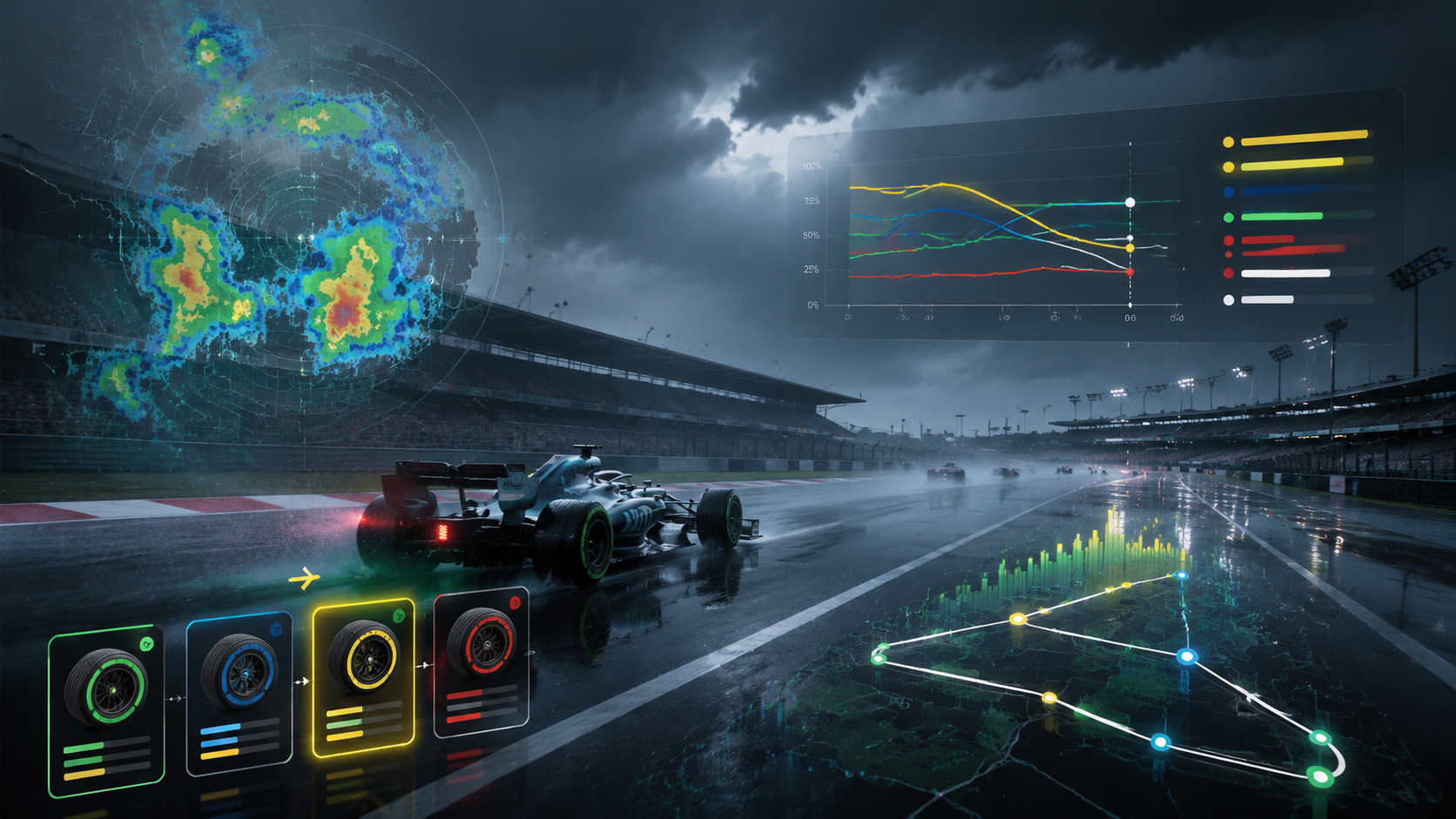
F1 weather matters because it changes the shape of the race. In a dry, stable Grand Prix, car pace and track position explain most of the probability. In rain, probability spreads out. Strategy becomes more fragile, safety cars become more likely, tyre choices become harder, and driver errors become more expensive.
That is why weather deserves its own odds framework. It is not just a forecast widget next to a race preview. It is a market input. On GridOdds, the next-race page places weather beside race timing because the forecast is part of the odds story.
Key takeaways
- Rain increases volatility and can make long-shot outcomes more realistic.
- Timing matters more than headline rain chance: qualifying rain and race rain move different markets.
- Wind and track temperature can matter even when the race is dry.
- Weather can move both race odds and championship odds when title contenders are exposed.
Why Rain Changes F1 Probability
Rain does not simply make every driver more equal. It changes which skills and risks dominate. Mechanical grip matters more. Visibility drops. Braking points move. Tyre temperature becomes harder to hold. Teams must make strategy calls with incomplete information, often under safety car or virtual safety car pressure.
The market response depends on the expected timing. Rain before qualifying mainly affects grid position. Rain during the race affects strategy, incidents, and pace. Rain late in the race can create asymmetric risk because the leader has more to lose while chasers can take strategic chances.
The Weather Inputs That Matter
Rain probability
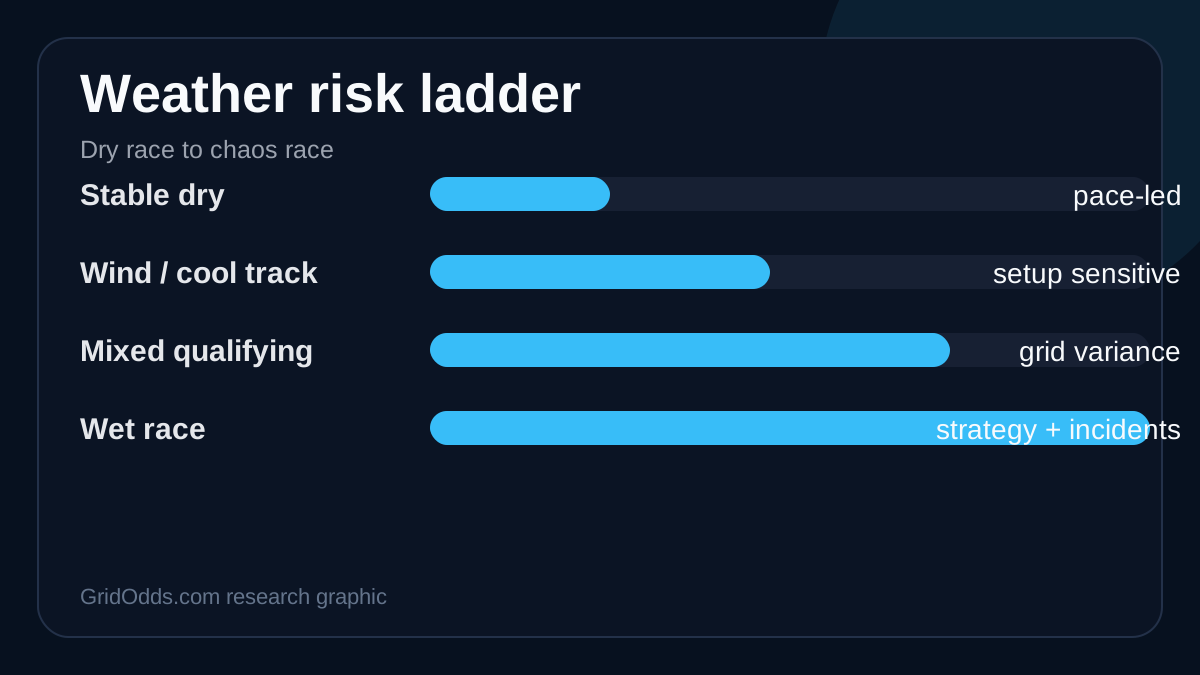
Headline rain chance is the starting point, but not the decision. A 60% rain chance across the day is less useful than knowing whether rain is likely during qualifying, the race start, or the final stint. Markets move most when rain timing overlaps with competitive sessions.
Wind direction and gusts
Wind can hurt cars with narrow aerodynamic operating windows. Gusts make braking and high-speed direction changes less predictable. If a team has looked unstable in windy practice sessions, a gusty forecast can reduce confidence even before rain enters the picture.
Track temperature
Track temperature affects tyre warm-up and degradation. A cooler-than-expected race can help teams that struggle with overheating. A hot race can punish cars that slide more or run aggressive setups. Weather analysis is not just wet versus dry.
How Weather Moves Race Odds
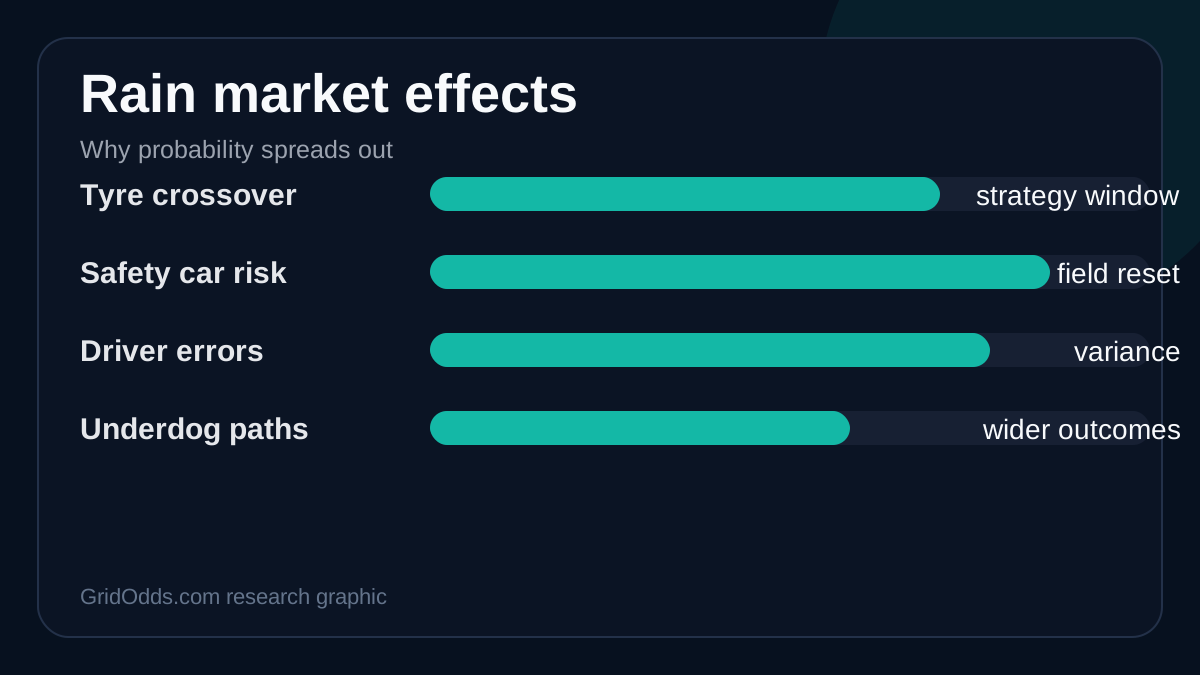
Race-winner markets usually react first. If rain is expected on a street circuit, the polesitter may shorten after qualifying but drift if the forecast implies a high safety car probability. If rain is expected on a circuit with easy overtaking, the market may give more weight to race pace and tyre skill than grid position.
Weather also affects podium and points markets. A wet race can create opportunity for midfield teams if the front runners face strategy errors or incidents. That is why a weather article should link naturally to race-winner odds rather than repeat a generic championship preview.
How Weather Moves Championship Odds
Championship odds move when weather changes expected points for contenders. A title leader starting in traffic on a wet weekend faces more downside than a chaser starting near the front. A driver known for wet-weather execution may receive a market premium if rain is likely. A team with poor pit-wall decision-making may be discounted in mixed conditions.
These are not certainties. The point is that weather changes the distribution. The market may price a wider range of results even if the most likely winner stays the same.
Common Weather Misreads
- Treating rain chance as binary instead of timing-based.
- Assuming rain always helps underdogs.
- Ignoring wind because the race is technically dry.
- Overrating Friday wet running when Sunday is forecast dry.
- Missing the safety car effect on strategy and track position.
A Practical Weather-Odds Workflow
Start with the forecast timing. Then ask which session it affects. If it affects qualifying, focus on grid position and track evolution. If it affects the race, focus on tyre crossover windows, safety car probability, and teams that execute well under uncertainty. Finally, compare the size of the market move with the actual risk. Weather can create value, but it can also create overreaction.
GridOdds is an odds research site, not a sportsbook or financial adviser. Use this as educational analysis only, and only participate in prediction markets or betting products where it is legal for you.
Why Weather Content Can Build Topical Authority
Weather is one of the best niche clusters for GridOdds because it sits between fan search behaviour and market analysis. People search for “F1 weather” before a race because they want to know whether the weekend will be chaotic. Odds readers ask a more specific version of the same question: how much chaos is already priced in?
That lets GridOdds publish evergreen weather logic and circuit-specific weather pages without cannibalizing the main odds pages. The main page can show the next race forecast. The weather cluster can explain how to read that forecast. A British Grand Prix weather article, a Belgian Grand Prix weather article, and this evergreen rain guide can all link back into the next-race page and the weekend odds guide.
Rain Timing: The Detail Most Previews Miss
The market should care less about a broad rain percentage and more about timing. Rain at 9 a.m. before qualifying may wash the track clean and change grip evolution. Rain during Q3 can scramble the front rows. Rain 20 minutes before the race start can force teams into a difficult tyre decision before they have real information. Rain in the final stint can turn a controlled race into a restart lottery.
This is why simple weather widgets are not enough. The forecast needs to be translated into session risk. A 40% rain chance can be more important than an 80% rain chance if the 40% window overlaps with qualifying or the race start.
Circuit-Specific Weather Effects
Not every circuit reacts to weather the same way. Spa magnifies rain because of elevation, long laps, and microclimates. Silverstone magnifies wind because exposed corners can punish unstable aero platforms. Monaco magnifies qualifying rain because track position is so powerful. Singapore magnifies heat and humidity because tyre life, driver fatigue, and safety car risk are all part of the picture.
That is the argument for a circuit weather cluster. Each race page can answer one focused query while reinforcing the same topical authority: GridOdds explains how race conditions affect probability. The evergreen page you are reading becomes the hub; race-specific weather pages become spokes.
Weather Signals to Watch Before the Market Moves
- Forecast timing by session, not just daily rain percentage.
- Track temperature relative to tyre operating windows.
- Wind direction through high-speed corners and braking zones.
- Chance of mixed conditions between qualifying and race day.
- Whether the teams have recent wet-running data at that circuit.
- Pit-wall performance under previous mixed-condition races.
- How much the market already moved after the forecast changed.
Those signals are useful because they help readers avoid stale narratives. Rain is not automatically good for underdogs. Sometimes it helps the best driver in the best car because they manage risk better. Sometimes it turns the midfield into a real threat because safety cars erase gaps. Context decides which version applies.
Where Weather Creates Mispricing
Weather creates mispricing when the market reacts to the headline and misses the mechanism. A wet forecast may shorten a famous wet-weather driver even if they are starting too far back at a track where spray makes overtaking difficult. A dry-to-wet race may overvalue the leader if the chasing car has better tyre warm-up. A windy forecast may be ignored because it does not sound dramatic, even though it can destabilize cars through the fastest corners.
The best content angle is not “rain means chaos.” That is too generic. The stronger angle is: which part of the weekend becomes more uncertain, and which market has not priced that uncertainty yet?
Bottom Line
F1 weather affects odds because it changes the probability distribution. Dry races usually reward baseline pace. Mixed races reward adaptability, strategy, and risk control. Heavy rain increases variance, but it does not remove skill. The right way to read weather is to map the forecast to the session, circuit, and market price before deciding whether the move is justified.
Search Intent: Why “F1 Weather” Is a Better Cluster Than It Looks
The phrase “F1 weather” looks broad, but the real intent changes every race week. Some users want the forecast for the next Grand Prix. Others want to know if rain helps their favourite driver. Odds readers want to know whether the market has already priced the chaos. That makes this a strong hub page because it can serve evergreen education and feed circuit-specific weather articles.
The existing GridOdds next-race page handles live forecast context. This article handles interpretation. Circuit pages like British Grand Prix weather, Belgian Grand Prix weather, Monaco rain risk, or Singapore humidity can all link back here as the evergreen explanation.
Example Scenario: Qualifying Rain, Dry Race
Qualifying rain with a dry race creates a specific kind of market risk. The grid can become distorted, but the race may reward normal dry pace. A fast car starting out of position may still have recovery potential at an overtaking-friendly circuit. At a street circuit, the same qualifying surprise can be much more durable because track position matters more.
This is where many odds previews become too blunt. They say rain equals chaos, but they do not separate qualifying rain from race rain. A good GridOdds article should always ask which session is affected before interpreting the market move.
Example Scenario: Dry Weekend, High Wind
Wind is easier to miss because it does not look dramatic on a forecast graphic. But in modern F1, wind can change braking confidence, high-speed stability, and tyre sliding. A car that has a narrow aerodynamic operating window may lose more performance in gusty conditions than the headline pace table suggests.
If the market barely moves on a windy forecast, there may be an analytical opening. Not every wind forecast matters, but exposed circuits and cars with unstable rear ends deserve more attention than a simple dry-weather preview would give them.
What Weather Infographics Should Show
The most useful weather infographics are not decorative rain clouds. They should show the relationship between condition and market effect. A weather-risk ladder, a session timing grid, and a circuit sensitivity chart are all stronger than a generic wet-track image because they teach the reader how to think.
For Google Images, descriptive filenames and alt text matter. A graphic named weather-risk-ladder.svg with alt text explaining rain, wind, tyre temperature, and safety car risk is more useful than a generic hero image with no context.
Circuit Weather Pages to Build Next
The strongest follow-up content should be circuit-specific. Silverstone wind, Spa rain, Monaco qualifying risk, Singapore humidity, and Zandvoort coastal weather all create different market problems. Those pages can be shorter than this hub, but each should include forecast timing, historical race risk, overtaking difficulty, and the likely odds channel affected first. The best version also names which market should react first: qualifying, race winner, podium, or championship.
This gives GridOdds a clean topical map: one evergreen weather hub, one next-race live page, and race-specific weather odds pages published before each relevant Grand Prix. That is a natural internal-link structure and a useful reader journey.
Frequently Asked Questions
- Does rain always make F1 odds more volatile?
Usually yes, because rain increases strategic uncertainty and incident risk, but the size of the effect depends on circuit and timing.
- What is the most important F1 weather factor?
Rain timing is the most important factor. Rain during qualifying and rain during the race affect different markets.
- Can dry weather still move F1 odds?
Yes. Wind and track temperature can affect tyre degradation, car balance, and race pace.