
F1 safety car odds are really a question about race disruption. A safety car does not make every outcome random, but it can turn a controlled race into a new probability tree. Gaps disappear, pit stops become cheaper, tyre offsets become sharper, and restarts give drivers a new chance to attack or lose position.
That matters for race-winner markets, podium markets and championship markets. A driver leading by eight seconds before a safety car is not in the same position after the field bunches up. A chaser who looked stuck behind traffic may suddenly get a free stop. A title leader protecting points may be forced into a restart where the downside is larger than the upside.
This guide explains how to read safety car risk as an odds input. It connects naturally with the F1 weather odds guide, because rain increases incident probability, and with the Grand Prix odds guide, because race-winner probability can change in seconds.
Key takeaways
- A safety car changes odds by erasing gaps and changing pit-stop economics.
- Street circuits, wet starts and low-runoff tracks deserve higher disruption assumptions.
- The biggest market move often belongs to the driver who gets a cheap stop, not the driver who caused the incident.
- Championship markets can move when a safety car changes expected points for title contenders.
Why Safety Cars Matter to Probability
Formula 1 markets price expected paths. Before a safety car, those paths may be dominated by pace, tyre degradation and track position. After a safety car, the race may restart with bunched cars, fresher tyres, different strategies and less time to recover from mistakes. The probability distribution widens.
The key is that the effect is not equal for everyone. The leader may lose a gap. A driver who already stopped may lose advantage if rivals get a cheap stop. A driver yet to stop may gain massively. A midfield car with fresh tyres may become a podium threat if the restart places it near the front.
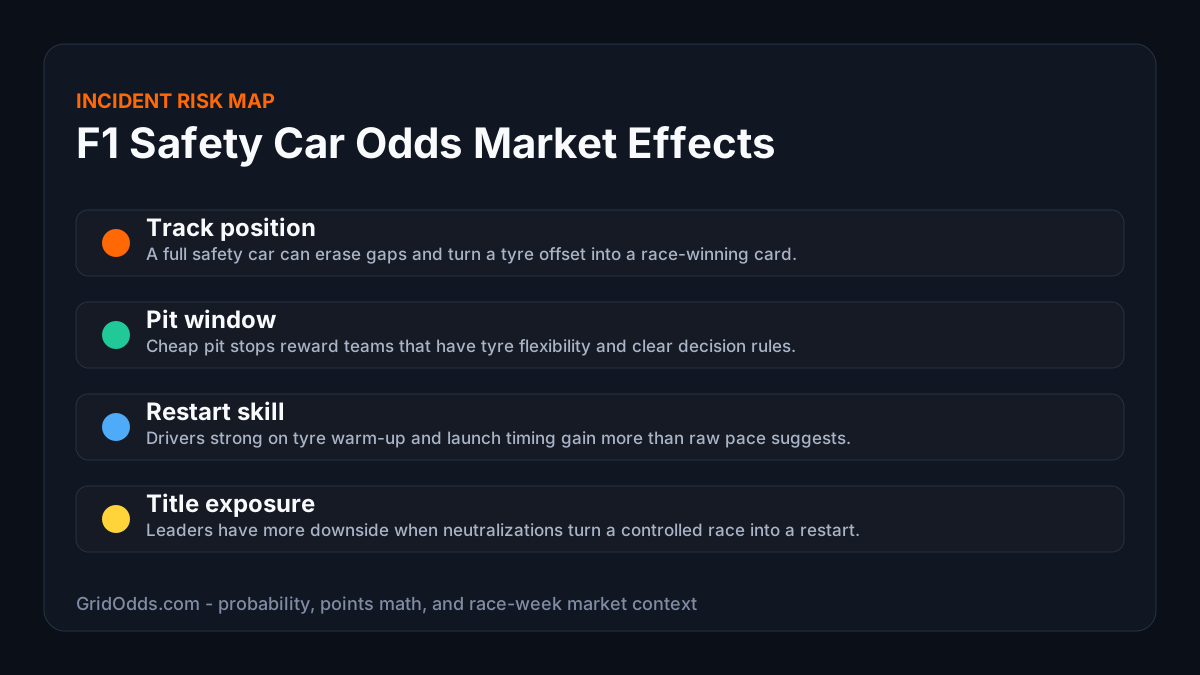
The Main Safety Car Channels
Gap compression
The simplest channel is gap compression. A ten-second lead can become a nose-to-tail restart. That does not erase the leader's pace advantage, but it removes the buffer. If the following car has better tyre warm-up or straight-line speed, the restart can be a real threat.
Cheap pit stops
The second channel is pit-stop economics. Under a full safety car, the time loss for a pit stop can be much lower than under green-flag conditions. Drivers who have not stopped can gain a strategic advantage. Drivers who stopped just before the safety car may be punished through no fault of their own.
Tyre offsets
Safety cars can create tyre offsets that would not have existed otherwise. A driver on new soft tyres can attack a rival on older hard tyres. A driver on cold tyres can be vulnerable for one lap. In short-race restarts, that first lap can define the result.
Restart execution
Restart execution is a skill. The leader controls pace, but the field behind can use slipstream, tyre temperature and positioning. Some drivers are excellent at timing restarts. Others are more vulnerable when the tyres are cold or when pressure arrives immediately.
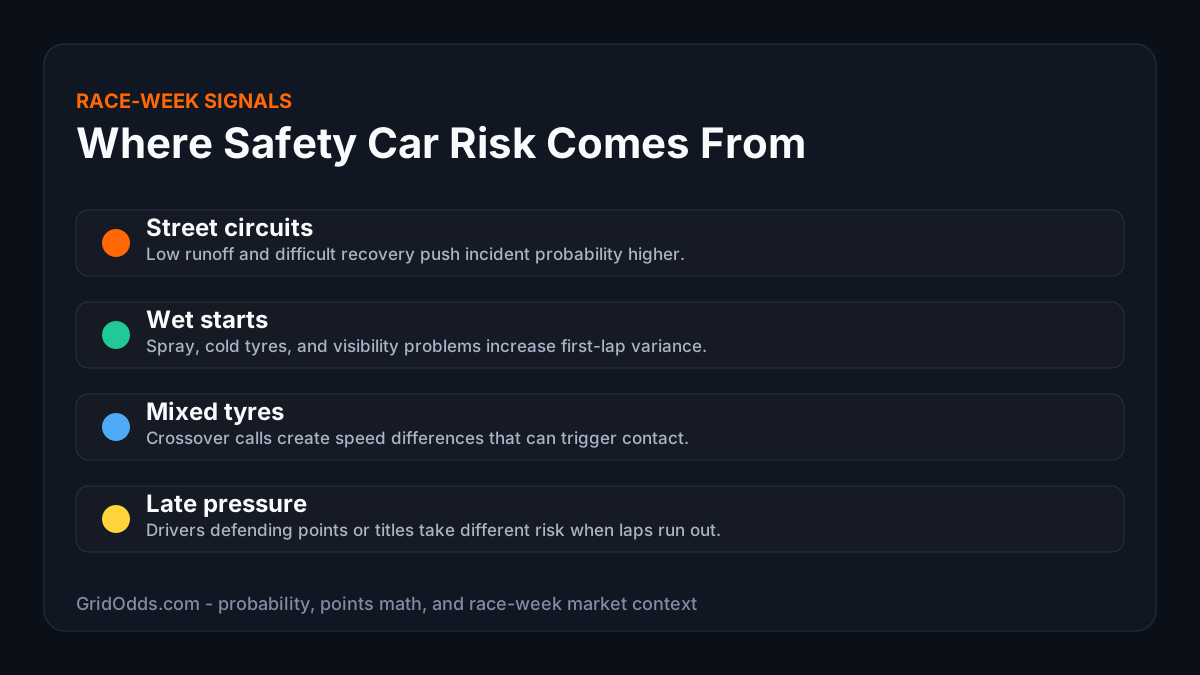
Which Circuits Carry More Safety Car Risk?
Street circuits usually carry higher safety car risk because there is less runoff and recovery can be difficult. Monaco, Singapore, Baku and Jeddah-style layouts can turn small errors into blocked-track situations. A gravel trap or runoff area may only require a yellow flag elsewhere, but a narrow street circuit may require a full neutralization.
Weather also matters. Rain increases spray, braking uncertainty and tyre crossover decisions. Mixed conditions can be especially unstable because different cars may be on different tyres with very different grip. That is why weather and safety-car analysis should be linked rather than treated as separate topics.
How Safety Cars Affect Championship Markets
A safety car affects championship markets through expected points. If a title contender is leading comfortably, a safety car can increase downside by creating restart risk. If a challenger is trapped behind traffic, a safety car can increase upside by giving them a strategic reset. The same neutralization can be bad for one title path and good for another.
This is where live probability pages matter. A race incident can change the Sunday result and the championship curve at the same time. The drivers championship market and stats page help readers see whether the move is a one-race reaction or a durable title change.

Where Markets Can Misprice Safety Car Risk
Markets can misprice safety car risk before the race if they underweight circuit history, weather timing or restart exposure. They can also misprice after the safety car by reacting to track position without accounting for tyre age. A driver may restart in second but have much better tyres than the leader. Another may restart in first but be exposed to a faster car with DRS after one lap.
The most useful question is not "will there be a safety car?" The better question is "who benefits if one arrives at this point in the stint?" That turns a generic incident forecast into a probability model.
A Practical Safety-Car Odds Workflow
Before the race, identify the circuit risk, weather risk and likely pit windows. During the race, track who has stopped, who has tyre flexibility and which title contenders are exposed. After a safety car is deployed, compare the market move with the actual strategic position. The price may move quickly, but fast does not always mean correct.
For content planning, safety car articles are useful support pages. They may not have large keyword volume, but they answer a specific race-week question and reinforce GridOdds as a site that explains probability mechanisms. Link them to weather, Grand Prix odds and expected value pages so readers can move from incident risk to broader market interpretation.
Bottom Line
Safety cars change F1 odds because they change the race state. They compress gaps, alter pit timing, create tyre offsets and increase restart variance. The best analysis does not treat neutralizations as random chaos. It asks who gains, who loses, and whether the market has moved enough to reflect the new points path.
Pre-Race Safety Car Checklist
A safety-car checklist should begin with the circuit. Street circuits, narrow layouts and tracks with difficult recovery zones deserve more disruption risk than open circuits with generous runoff. Then add weather. Wet starts, mixed conditions and cold tyres increase the probability of first-lap incidents and strategy mistakes.
Next, map the pit windows. A safety car matters most when it arrives near a planned stop or when tyre strategies are split. If the field is already on similar tyres and no one can gain a cheap stop, the market impact may be smaller. If half the field is committed to one-stop strategy and the other half can switch cheaply, the impact can be large.
How to Read Safety Car Moves Live
When a safety car appears, do not look only at the running order. Look at tyre age, stop count, restart position and remaining laps. A driver in third on fresh tyres may have a better win chance than a driver in second on old tyres. A leader may still be favourite, but the size of the lead has changed from seconds on track to control of the restart.
Live markets can move faster than analysis pages. That is why GridOdds articles should teach a repeatable process rather than pretend one static price is enough. The useful question is whether the market has correctly repriced the new race state. Sometimes it will. Sometimes it will overreact to the visible bunching and miss tyre context.
Safety Cars, Weather and Expected Value
Safety car risk belongs in the same family as weather and expected value. Rain can increase incident probability. Incident probability can change pit windows. Pit windows can change the expected points distribution. A reader who understands that chain can evaluate market movement more carefully than someone who only sees a yellow Mercedes or Aston Martin at the front of the pack.
This is also why safety-car content strengthens the broader GridOdds cluster. It links the weather guide, Grand Prix odds guide, expected value article and live odds pages. The page may target a narrow keyword, but it answers a real mechanism behind race-week probability.
Common Safety Car Misreads
The first misread is assuming every safety car helps the driver behind. Sometimes the leader benefits because they get a cheap stop while rivals have already stopped. The second misread is assuming a restart always favours the faster car. Tyre warm-up, battery state, straight-line speed and restart timing can matter more in the first corners.
The third misread is ignoring championship incentives. A title leader may defend differently from a driver chasing a first podium. A teammate may be asked to protect a strategic position. A team may choose points security over race-winning risk. Safety-car odds are about incentives as much as incidents.
Example: Safety Car Helps the Leader
Many readers assume a safety car always hurts the leader because it removes the gap. That is not always true. If the leader has not stopped and rivals behind have already used older tyres, a safety car can give the leader a cheaper stop and protect track position. In that case, the neutralization may strengthen the leader's position even though the visible time gap disappears.
This is the type of nuance that makes safety-car odds content valuable. A race market may initially move toward the chasing pack because the field is bunched. A better read asks who has tyre age, stop count and restart control. If those factors still favour the leader, the first market reaction can be too dramatic.
Example: Safety Car Helps the Chaser
The opposite scenario is just as important. If a chaser is stuck behind traffic but has not stopped, a safety car can create a cheap stop and put them back into the fight. If they restart on fresher tyres with enough laps left, their win probability can rise more than their track position suggests. This is especially true at circuits with long straights or restart overtaking zones.
For championship odds, the chaser scenario matters because it changes expected points. A driver who looked set for fifth may suddenly have a podium path. A title rival who looked comfortable may need to defend on cold tyres. The race and title markets can move together when the points swing is large enough.
What GridOdds Should Track During Safety Car Windows
The most useful live view is not just the neutralization itself. It is stop count, tyre age, remaining laps, restart order and championship exposure. Those inputs explain why two drivers in similar track positions can have very different probabilities after the same safety car period.
For readers, the practical habit is to pause before accepting the first post-safety-car price. Check whether the driver who gained track position also has the tyres to keep it. Check whether the title contender who lost a gap still controls the restart. Then compare the answer with the market move.
Frequently Asked Questions
- Do safety cars change F1 odds?
Yes. A safety car can erase gaps, create cheap pit stops, bunch the field and increase restart variance, so race-winner and podium probabilities can move quickly.
- Which races have higher safety car risk?
Street circuits, wet races, tracks with low runoff and events with difficult recovery zones usually carry higher safety car risk.
- Can safety car risk affect championship odds?
Yes. If a title contender is exposed to restart risk, pit timing or traffic, the expected points distribution can change enough to move championship markets.
- Is safety car probability the same as betting advice?
No. It is a race-analysis input. GridOdds provides educational probability context, not financial, legal or betting advice.