
F1 sprint weekend odds need a different reading process from a normal Grand Prix weekend. A sprint format gives the market more competitive sessions, but it also creates more chances to overreact. The short race can reveal useful information about starts, tyre warm-up, dirty-air pace and driver risk, yet it is not the same thing as the Grand Prix.
That distinction is the whole point of this guide. Sprint weekends compress the odds cycle. Instead of waiting for practice, qualifying and the race, the market has to process sprint qualifying, the sprint, Grand Prix qualifying and Sunday in a tighter window. A price that looks sharp on Friday can be stale by Saturday afternoon.
GridOdds treats sprint data as one layer in a wider race-week model. Use the next race page for timing context, the F1 qualifying odds guide for grid-position interpretation, and the F1 points calculator when sprint points affect the title picture.
Key takeaways
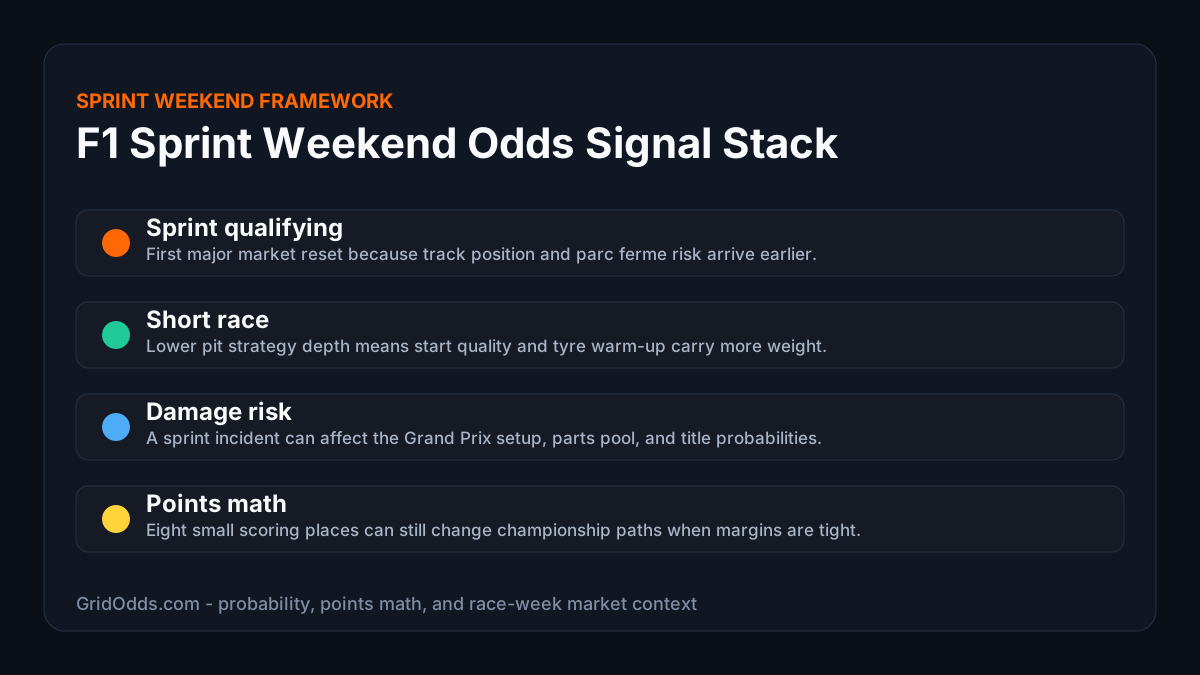
- Sprint qualifying is often the first major market reset of the weekend.
- The sprint race is useful, but it is not a full-fuel Grand Prix simulation.
- Sprint points can matter more in championship odds than casual fans expect.
- The best reads separate short-race information from Sunday race probability.
Why Sprint Weekends Create Different Odds
A normal race weekend gives the market a fairly familiar rhythm. Practice sets the tone, qualifying defines track position, and the race settles the points. A sprint weekend rearranges that rhythm. Competitive pressure arrives earlier, parc ferme risk arrives earlier, and drivers have fewer chances to correct a bad setup direction before the first meaningful session.
That extra pressure changes market behaviour. Traders may shorten a driver after a strong sprint qualifying lap even if the long-run picture is still unclear. They may overvalue a sprint win at a circuit where Sunday overtaking and tyre degradation are more important. They may also underreact to damage or setup compromises that matter more for the Grand Prix than for the sprint itself.
The Four Market Resets on a Sprint Weekend
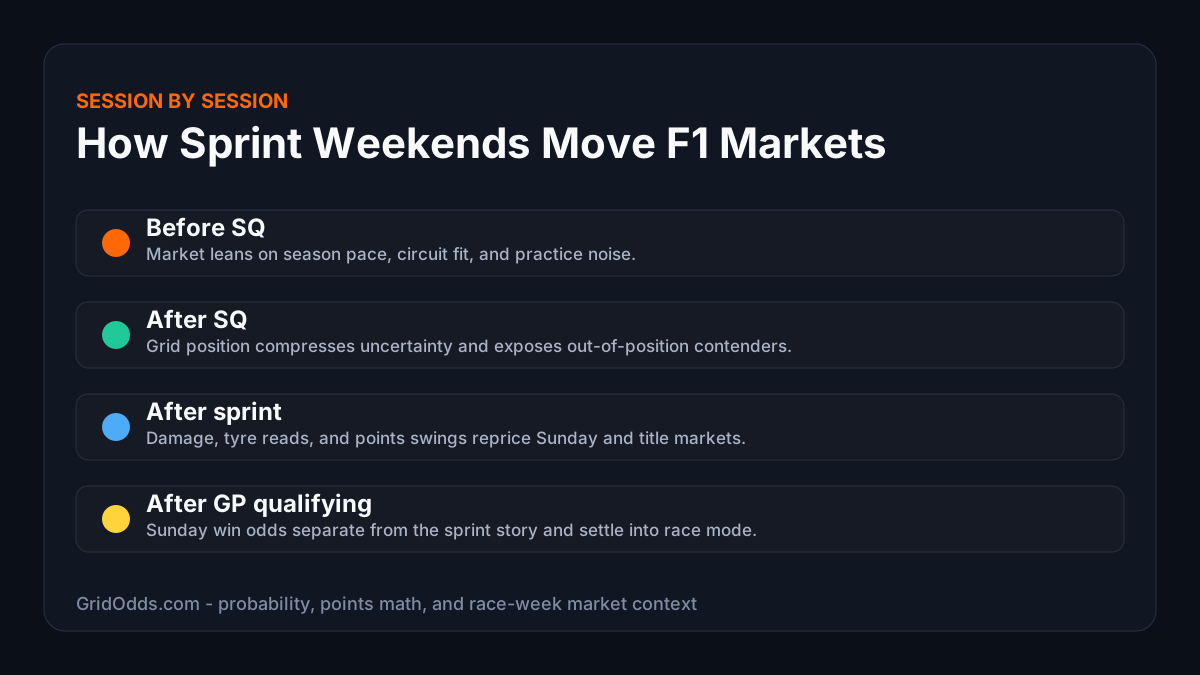
Before sprint qualifying
Before sprint qualifying, odds are mostly a blend of season pace, circuit fit, practice information and prior market confidence. This is the weakest point in the sprint odds cycle because the weekend has not yet produced a competitive lap. Prices can still be useful, but they should be treated as preliminary.
After sprint qualifying
Sprint qualifying tells the market who can switch the tyres on quickly, who is comfortable with the setup and who is already out of position. It is especially important at circuits where passing is hard. But it can also exaggerate tiny gaps because the format is short and the track may evolve quickly.
After the sprint race
The sprint race adds start data, tyre degradation clues, racecraft evidence and damage risk. It can move Grand Prix odds if it reveals a real pace advantage or a serious weakness. It can also move championship markets because sprint points are real points. Still, a sprint is shorter, lighter and strategically thinner than Sunday.
After Grand Prix qualifying
This is when Sunday odds should become more stable. The sprint has given context, but Grand Prix qualifying gives the main race grid. If sprint and qualifying evidence disagree, the market has to decide which session better explains the car's true race-week ceiling.
How Sprint Points Affect Championship Probability
Sprint points are easy to dismiss because they are smaller than Grand Prix points. That is a mistake in a close title fight. A driver who gains six or eight points in a sprint has changed the title arithmetic before Sunday even begins. If the rival then starts behind or carries damage, the effect compounds.
This is where the drivers championship tracker and the constructors championship tracker become useful. Sprint weekends do not just affect the race market. They affect the points path. A small points swing early in the weekend can change how aggressive a rival needs to be on Sunday.
Where Markets Can Overreact
The most common overreaction is treating the sprint winner as the automatic Grand Prix favourite. Sometimes that is correct. If the sprint winner controlled pace, managed tyres and showed clean-air speed, the signal is strong. But if the win came from track position, a better launch or a rival avoiding risk, the signal is weaker.
The second overreaction is assuming a poor sprint equals poor Sunday pace. A driver may run a conservative setup, protect tyres, avoid damage or simply be trapped in traffic. Sprint races are short enough that one bad start can define the result. Sunday gives more time for strategy and pace to show.
How to Read Sprint Odds Practically
Start by asking which market moved. If sprint winner odds moved, the market is responding to the immediate short race. If Grand Prix winner odds moved, the market believes the sprint revealed something about Sunday. If championship odds moved, the market is pricing points, damage, reliability or confidence in the car package.
Then compare the size of the move with the quality of the evidence. A clean sprint pole at a track where overtaking is hard deserves a different reaction from a sprint pole at a track where tyre degradation dominates Sunday. A sprint win with strong tyre management deserves more trust than a sprint win where the leader simply controlled a DRS train.
Sprint Weekends and Constructors Markets
Sprint weekends are especially important for constructors markets because both cars have more chances to score and more chances to suffer damage. A team with two consistent drivers can collect points before Sunday. A team relying on one lead driver can lose ground if the second car fails to convert sprint opportunities.
For constructors analysis, do not stop at who wins the sprint. Look at the two-car result. A second and fifth can be more valuable than a single sprint win with the other car outside the points. The constructors championship odds guide explains why team probability is built on both cars, not just the headline driver.
What to Publish Around Sprint Weekends
For SEO, sprint weekends are useful because they create recurring search intent without forcing duplicate articles. One evergreen guide can explain the framework. Race-specific pages can cover the actual sprint schedule, circuit traits, weather, points stakes and market moves. Those pages can link back here when they need to explain the sprint odds method.
The strongest race-specific sprint article should include the sprint schedule, the market favourite before sprint qualifying, what changed after the sprint, whether Sunday odds moved correctly, and how the title picture changed. That is helpful content because it teaches the reader how to interpret the number, not just what the number is.
Bottom Line
F1 sprint weekends give the market more information, but more information does not automatically mean better interpretation. The short race is a signal. It is not the whole weekend. Read sprint odds by session, separate sprint probability from Grand Prix probability, and always connect the result back to points math before making a championship read.
Pre-Weekend Checklist for Sprint Odds
Before a sprint weekend starts, the strongest checklist is simple but strict. Identify whether the circuit rewards qualifying position, tyre life, straight-line speed or low-speed traction. Then check whether the sprint format is likely to amplify that trait. A sprint at a track where passing is difficult gives early grid position more influence. A sprint at a tyre-degradation circuit may reveal who can protect rubber, but it still does not fully replicate a long Sunday stint.
The second checklist item is title exposure. If a championship leader can collect sprint points while a rival starts out of position, the sprint is not just a warm-up event. It becomes part of the title path. That is why sprint articles should link to both the weekend odds page and the points calculator. The reader needs to understand the race and the arithmetic.
How to Separate Sprint Signal From Sprint Noise
A sprint result is strongest when it confirms several independent signals. If the same driver was quick in practice, strong in sprint qualifying, clean at the start and able to manage tyres in the sprint, the market has a better reason to move. If the result came from one launch, one traffic pattern or one rival avoiding risk, the signal is weaker.
The same logic applies to teams. A two-car sprint result is more meaningful than one isolated car looking quick. If both cars qualify well and hold pace, the package likely suits the circuit. If only one car performs, the market should ask whether driver execution or setup preference explains the result. Constructors probability should not move as strongly unless both cars improve the expected team floor.
Race-Specific Sprint Content Template
A useful race-specific sprint article should not repeat this evergreen guide. It should answer the live questions for that weekend. Start with the sprint schedule and circuit traits. Then show the pre-sprint market favourite, the sprint qualifying change, the sprint result and the Sunday implication. Finish by explaining whether the title market moved because of points, pace, damage or overreaction.
That structure avoids cannibalization. The evergreen page ranks for the method. The race-specific page ranks for the event. Both pages help each other because readers can move from the live weekend article to the deeper framework. Google can also see a natural topical cluster instead of near-duplicate sprint posts.
Common Sprint Weekend Mistakes
The first mistake is treating sprint pace as full-race pace. Fuel loads, tyre management and strategy depth are different. The second mistake is ignoring parc ferme consequences. A setup compromise can affect multiple sessions. The third mistake is forgetting that sprint points count. They may be small, but a close title fight can turn on small points swings before Sunday starts.
The final mistake is reading the sprint without the circuit. A short race at one track may be mostly track position. At another, it may reveal tyre weakness. The article should always explain which version applies. Without that circuit filter, sprint odds analysis becomes a recap rather than a forecast.
Example: When the Sprint Should Not Move Sunday Odds Much
Suppose a driver wins the sprint from pole on a circuit where overtaking is difficult, but the chasing car shows stronger tyre life in clean air. The sprint result is still valuable, but it may not justify a large Sunday move if Grand Prix qualifying has not happened. The market should ask whether the win came from genuine race pace or from controlling track position over a short distance.
That kind of example is why sprint odds articles should be careful with language. "Sprint winner" is a result. "Grand Prix favourite" is a forecast. They can point to the same driver, but they are not the same claim.
What GridOdds Should Track During Sprint Weeks
The cleanest sprint-week dashboard should track pre-sprint probability, post-sprint probability, Sunday qualifying probability and title probability separately. Combining them into one story hides the reason a market moved. A reader should be able to see whether the change came from points, pace, track position, damage or qualifying evidence.
Frequently Asked Questions
- What are F1 sprint weekend odds?
They are race-week and championship probabilities that react to the sprint format, including sprint qualifying, the short race, Grand Prix qualifying and the main race.
- Do sprint results predict the Grand Prix winner?
Sometimes, but not always. The sprint reveals tyre warm-up, launch quality and short-run pace, but Sunday strategy, fuel load and qualifying still matter.
- Can sprint points move championship odds?
Yes. Sprint points are smaller than Grand Prix points, but they can matter in a close title fight because they change both the standings and the remaining comeback math.
- When should F1 sprint odds be updated?
The cleanest updates come after sprint qualifying, after the sprint race and after Grand Prix qualifying. Each session answers a different market question.